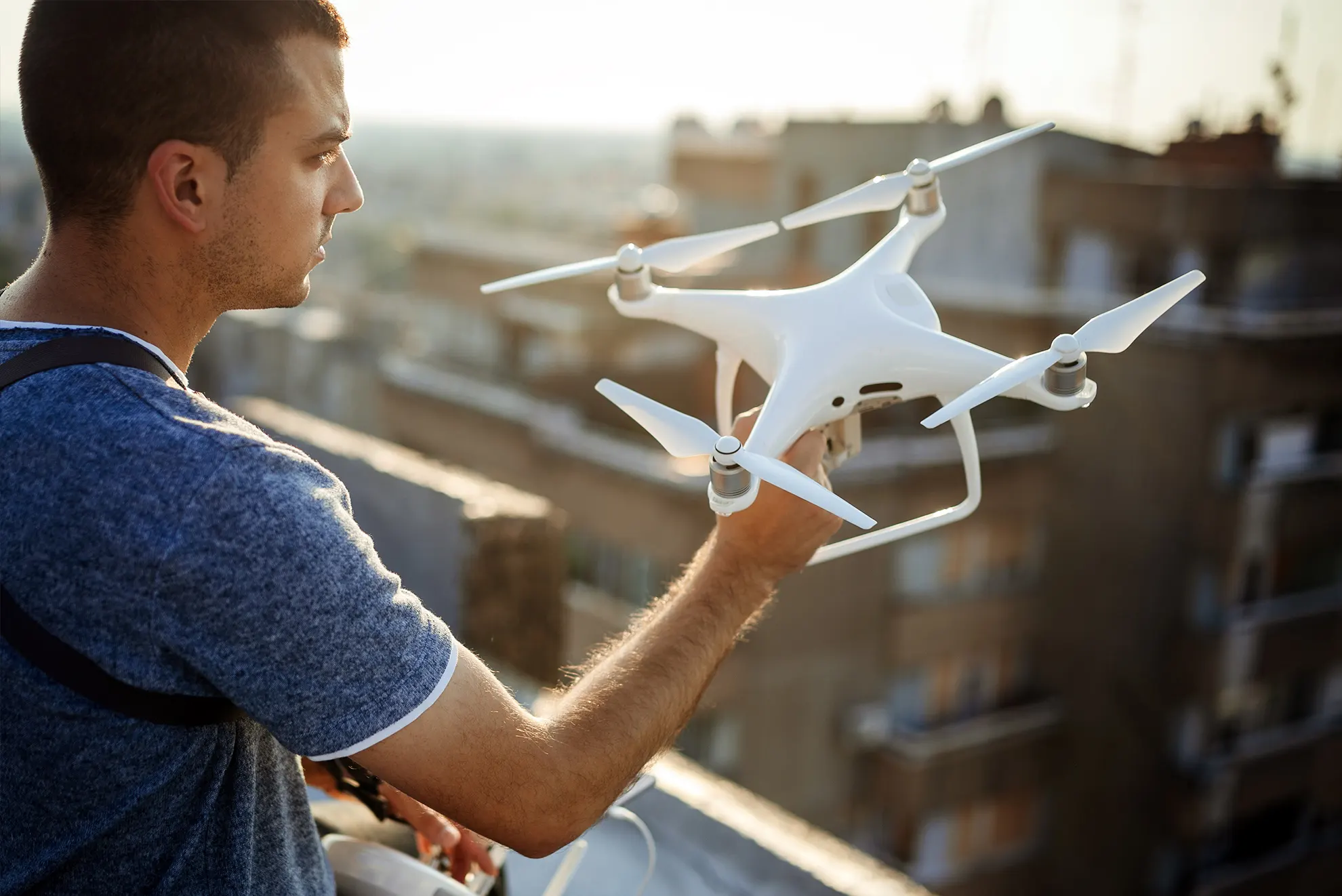
A drone is understood as that unmanned aerial vehicle capable of having a controlled and sustained flight. Drones have great potential and are capable of moving very quickly over various types of terrain, even to avoid obstacles. Controlling a drone allows you to get fascinating images. In recent years, the world of drones has grown exponentially.
CURRENT REGULATORY REGULATIONS AND PREVIOUS PROBLEMS
The State Aviation Safety Agency (AESA) regulates the use of drones. The standard that supports it is Royal Decree 1036/2017, of December 15 (which modifies the previous Royal Decree 552/2014, of June 27).
The previous regulation was very strict since it only regulated the flight of drones for professional purposes (for example, for investigations) and did not take into account recreational flights. Likewise, it had not been taken into regular consideration in which scenarios it was possible to use them. These defects or gaps in the regulations caused many problems in practice and led to the new current regulations.
THE NEW REGULATION. ISSUES TO HIGHLIGHT
- The possibilities of professional flight are expanded, especially the flight in urban areas or carried out at night. These flights must have express authorization from the State Aviation Safety Agency.
- In night flights, the drone must have some reflective element: paint, bands or lights.
- Limitations for recreational drone flight in Spain are also regulated.
REQUIREMENTS FOR THE USE OF RECREATIONAL DRONES IN SPAIN
- The drone, always within visual range of the pilot.
- It must never exceed 120 m in flight.
- It is prohibited to fly a minimum of 8 km from any airport, aerodrome or controlled airspace.
- Civil liability insurance is not mandatory, but it is highly recommended to have one, since the pilot will be responsible for any possible damage caused by the aircraft.
- The drone must bear an identification plate with the manufacturer’s name, model, serial number (if applicable) and the pilot’s contact information.
- The right to privacy of individuals who may appear in the images captured by the drone must be protected, and special care must be taken with their public disclosure so as not to violate the Data Protection Law (special attention to the Right to Honor and privacy)
REGULATION FOR DRONES OF LESS THAN 250 GRAMS
The lower the weight of the drone, the legislation is more permissive. However, there are also a series of requirements to fly this type of drone.
- It is allowed to fly the drone up to 20 meters above the ground over crowds of people, urban areas or buildings.
- It is prohibited to fly it in National Parks, as well as protected natural spaces.
- Forbidden to fly it within a radius of 8 km from any airport, airfield or other controlled airspace.
- In the event that the drone has a camera, you will have to comply with the provisions of the Data Protection Law and the Right to Honor and Privacy of people, so that you do not violate it.
- You have to identify it: Manufacturer, type of drone, model, serial number, name of the pilot and contact information.
DO I NEED A LICENSE TO FLY A DRONE IN SPAIN?
In this case, it is necessary to differentiate between whether it is about flying drones for professional use or for recreational use.
- To fly drones professionally, it is mandatory to have a drone license; In addition to being registered as a drone operator with the State Aviation Safety Agency (AESA). It should be added that it will be mandatory to be in possession of a medical certificate for a light aircraft pilot’s license for drones up to 25 kg, and a medical certificate for higher category drones (weight greater than 25 kg).
- However, for recreational drone flights, it is only necessary to have the knowledge to fly the aircraft safely. A recreational drone is considered to be one that weighs a maximum of 2 kg. However, a special authorization approved by the State Aviation Safety Agency is needed.
NEWS IN SPANISH LEGISLATION FOR 2021
The idea for 2021 of creating three categories to regulate flight restrictions is being considered.
- Open category, which includes low-risk flights operated by amateur pilots.
- Specific category, for medium risk operations that require authorization.
- Certified category, reserved for high-risk flights, for which the pilot must be certified as an operator.
To find out where you can fly your drone, the ENAIRE Drones website, belonging to the Ministry of Public Works, specifies the areas enabled by our geography. It is important to bear in mind that whether the use of the drone is professional or recreational, you have to guarantee the safety of the flight and you must be responsible with its use, as well as prudent. Also, you should never lose sight of the aircraft or fly it in adverse weather conditions, such as rain or wind.
Anna Nicolás Torán
Attorney at Martínez Caballero Abogados